Unseen Challenges and Untapped Opportunities

Supply chain management is a pivotal aspect of business operations, and within it, inventory management stands as a essential for ensuring customer satisfaction and the seamless delivery of your products to consumers. This is especially crucial when entrusted to a third party, such as a retailer, be it in a physical, digital, or hybrid setting.
One indispensable element of this process is demand forecasting, which serves as a compass guiding the effectiveness of your inventory management efforts. Predictive analysis, leveraging historical data through various algorithms like time-series and clustering, becomes instrumental in this endeavor. For those who have recorded events, methods such as ARIMA or Holt-Winters can provide valuable insights. Combining predictive algorithms with optimization or simulations, along with variables like marketing strategies and company reputation, can significantly enhance accuracy. Of course, the degree of precision achievable hinges on the quality and management of your data. However, our focus here is not on these well-trodden paths, as numerous articles have already explored these facets in detail.
Instead, let’s delve into the often-overlooked but critical aspects of inventory management that many consumer packaged goods (CPG) companies tend to ignore.
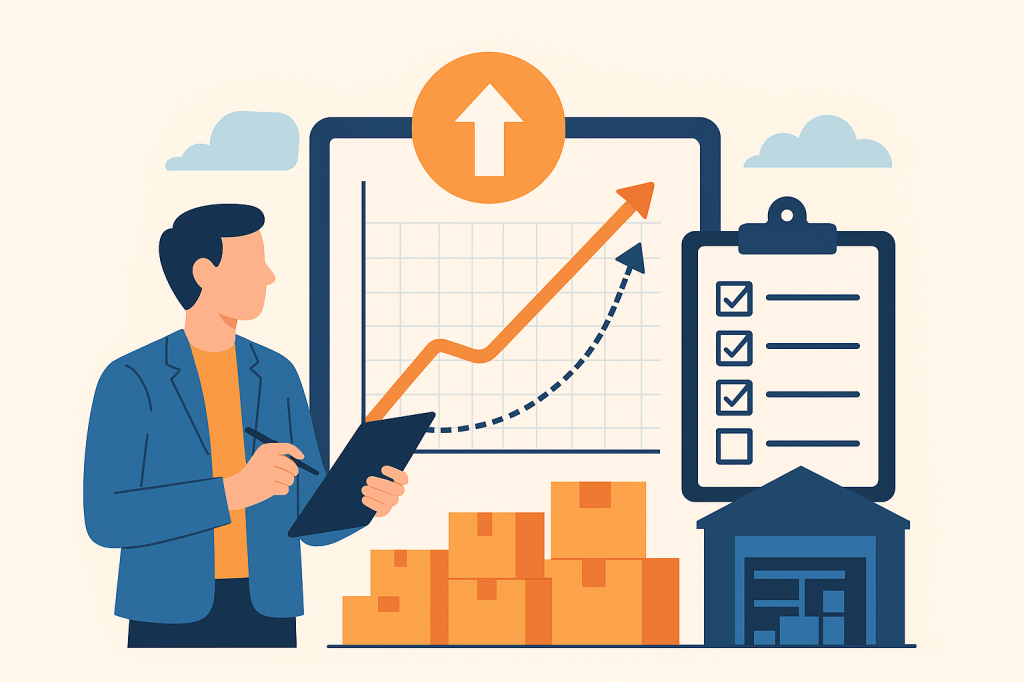
Take, for instance, the realm of independent commerce, where wholesalers serve as primary or secondary supply sources, even when manufacturers have a direct sales channel. Surprisingly, many companies pay scant attention to how their product inventories are managed in this context. Their primary concern often boils down to hitting monthly sales targets through maximizing warehouse stock levels without necessarily considering product variety or demand prediction for this distribution channel. This oversight stems from a corporate focus on different priorities and a dearth of information from wholesalers. Surprisingly, our findings reveal that around 20% of products ordered by retailers were consistently out of stock, representing a staggering 25% of total order value. This translates to lost secured sales, not to mention the potential losses incurred when customers visit the wholesaler only to find their desired products unavailable. These situations frequently lead to customers opting for substitute products, which are often from different brands altogether.
Another challenge emerges when companies strive to meet monthly sales targets. In their pursuit, they may end up oversupplying retailers or failing to align product ranges with the point-of-sale (POS) demand. Frequently, such sales rely on promotions or discounts to achieve these targets, which can result in reduced profitability that becomes evident in the subsequent month.
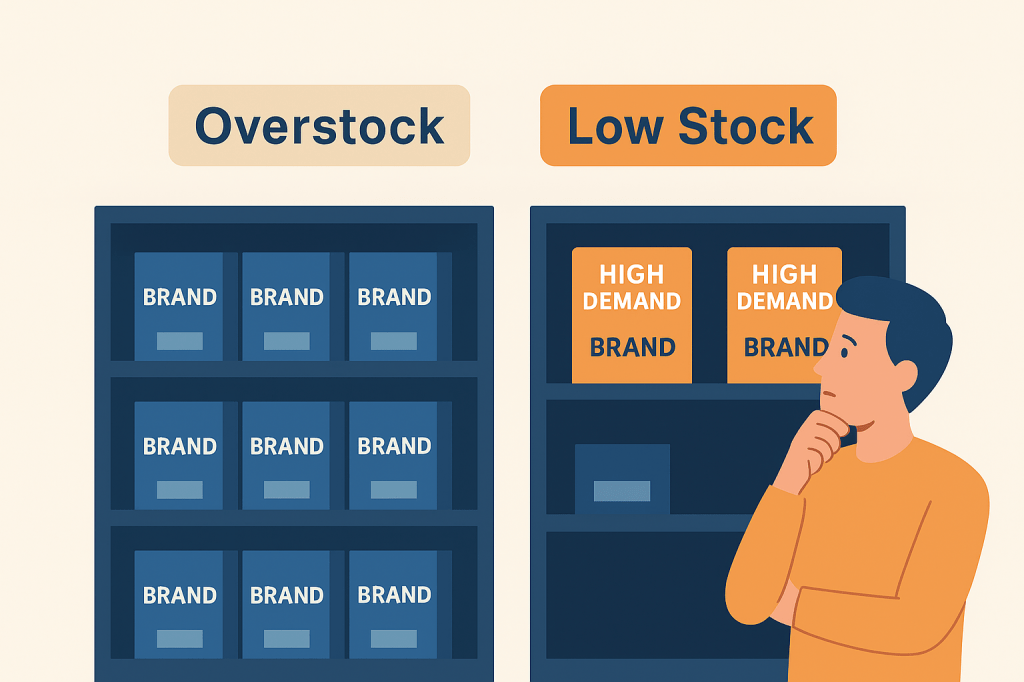
An illustrative example comes from an analysis conducted with a single manufacturer. They introduced a promotion that required a 25% increase in the purchase of a specific SKU to unlock a 30% discount on that brand. This enticing offer was well-received by retailers. However, the majority of retailers adjusted their purchasing behavior by reducing orders from other brands to take full advantage of this promotion. Consequently, the overstock of the promoted brand equaled the out-of-stock situation for high-rotation brands from the same distributor. Shockingly, approximately 35% of the total value of weekly sales remained unsold. This resulted from a combination of stockouts for high-rotation SKUs and an excess of the promoted brand that lacked corresponding demand.
Such promotions, though attractive on the surface, ultimately impact both retailers and companies negatively. Sales targets may be met, but repercussions are often felt in the following month. Alternatively, companies can apply these promotions across their entire product portfolio, affecting other company’s budgets. However, the fallout from such moves ultimately affects both retailers and the promoting company.
Furthermore, companies can explore segmenting frequency based on opportunities with retailers. By increasing visit frequency when the additional volume covers a significant portion of the associated costs or can be offset by other nearby POS locations, companies can optimize their interactions. This approach often proves effective when offering a wide range of products.
To address this opportunity, offering credit to retailers is an option. However, careful credit management is crucial, with a primary focus on internal controls rather than concerns about uncollectable accounts or payment delays. Effective communication with retailers, facilitated through apps or web platforms, can mitigate such risks.
For businesses managing an extensive assortment, analyzing and experimenting with increased visit frequency can be beneficial. Much like Amazon Prime, which increased usage frequency by absorbing delivery costs, a well-managed increase in visit frequency can significantly boost average ticket sales. For instance, in our application, customers who increased their frequency from once a week to four times a week witnessed a 55% increase in their average ticket. With our app, which manages more than 500 SKUs, most retailer needs are met through a single supplier.
Now, one might wonder why physical stores are still relevant in the age of online shopping. The answer lies in delivering an omnichannel experience to consumers. The first step in achieving this is ensuring consumers can find the product they seek. While there are numerous other considerations, such as training, engaging with store staff, and running promotions for end-users, without the right product in the right place at the right time, these efforts may be in vain.
But why should companies prioritize independent stores over chain or high-end retailers? The answer lies in the social aspect of human behavior. Consumers, like all individuals, are social creatures who enjoy interacting with others. Organized retail, while transactionally efficient, often lacks the warmth and personal connection found in mom-and-pop stores. These smaller establishments are embedded in their communities, know their customers personally, and embody the essence of their neighborhoods. Companies that harness these relationships can strengthen their brands and support hardworking small business owners.In conclusion, always keep your consumers in mind, even when devising B2B promotions. Neglecting the final user can have adverse consequences sooner rather than later. Segment your route-to-market (RTM) strategy, ensuring you extract maximum value from each channel and touchpoint within them.
 pluris.com.mx